Showing posts with label Bohol Tour. Show all posts

Friday, October 22, 2010

Bohol Tour » Three Island Adventures in Panglao You Should Not Miss

This will be the last in the series of posts about our Bohol Tour (whew! finally.) I should’ve posted it on consecutive dates but my evil foe Mr. Procrastination was always winning lately – blame it on the rain and cold weather. To keep the life flowing on this blog, I deliberately posted some “inserts” in between my bohol tour series. Also, I intentionally reserved our Panglao island hopping escapade to be on the last because for me, this is the most memorable and exciting part of our tour – maybe because I’m a water-and-sunset hopeless-romantic type (weeee).

Don’t miss these three activities if you want to visit Bohol: 


1. Dolphin Watching /Chasing) – Pamilacan Island


I didn’t expect that on this year, I would wake up on a paradise, lazily prepare to go on a boat trip, to chase dolphins.


Well, that is exactly what we did to escape SSDD (Same Shit Different Day) this year – we chase dolphins in Pamilacan Island, how about that for a change? It sure was a lot of fun plus seeing the diverse natural underwater creatures was a sure treat. 


 It's hard to take picture of the dolphins, so we just took some videos

I’ve seen dolphins before in a trained dolphin show in Subic but not those swimming freely in an open sea. These Panglao dolphins are not the common trained entertainers but I’m sure you will enjoy it because I saw other foreign and local tourists, also chasing dolphins who are seemed to be transported in a chorus of jolly cheers and high spirits. Likewise, we are so thrilled everytime we saw school of dolphins jumping off the water. Not too long, the area looks like a cheering contest, with a number of boats carrying other tourists who are also in for some visual and chasing thrills.

2. Finding Nemo - Snorkeling at the Balicasag Island 


It’s now time to calm ourselves after we got our dose of morning adrenaline rush from the thrilling dolphin chase. We docked at the sandy coral line beach of the picturesque Balicasag Island and immediately prepare to look for Nemo. The locals in the island offer fresh fishes and seafood for lunch so we order fresh octopus/squid and a kilo of fish first and have it cooked, while we do our snorkeling spree.

We boarded a smaller banca to bring us to the sanctuary where we will look for Nemo.

Compared to my snorkeling experience in Boracay, the fishes here are more colorful and friendly and showy. We brought with us a pack of loaf bread for the fishes (and for our merienda of course.) I suggest you bring your own loaf of bread for the fishes because the price is tripled if you will buy it on the island. They also provide snorkeling gear and aqua shoes.

Sea urchins offered by bankeros to be eaten raw with vinegar.    
After an hour and a half of fun in finding Nemo and feeding his colorful relatives, we decided to come back to the island for lunch. We had a really delicious fresh sinigang, and adobong pusit – Hakuna  Matata!

3. The Virgin People: Island hopping at the Virgin Island


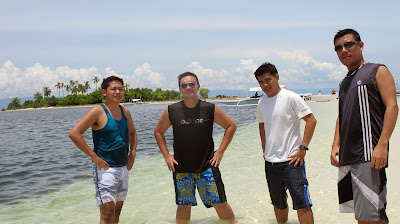
Our sumptuous lunch re-energized us so it’s now time to sink an Island! We had another few minutes of motor – banca ride from Balicasag until we saw this amazing oasis amidst the open and pristine sea – it’s the Virgin Island!


 What makes this island notable is the long and looping shallow white sand shore that looks like a slightly submerged white semi-circle bridge.

our calendar-girl travel buddies
the beach boys
A few meters on both sides of the “sand bridge” are shallow sea-grass that gives the water a dramatic turquoise touch drifting into dark blue.

Of course, we immediately ready ourselves for our favorite shot – the JUMP SHOT!

On our way back to our resort, we had a quick nap at the banca, we are all exhausted but still, we got this light feeling. Somewhere on the deep recesses of our mind are the happy memories and the bond that this trip brought us.

Our hide-out at the Alona Beach
This is the view that will greet you every morning
calm reflections
when the clock stops ticking
The struggle of the clouds vs. the rising sun
peace on a bloody sunset
Yodz's Note:

We all have busy corporate lives, but this tour and other trips like this gives us the opportunity to pause the bundy clock. To touch base again. My best memories are forged on trips, so I do whatever is necessary to save some money to make an occasional out-of-town trip. Our next stop, maybe Palawan.

Here's the summary of our 2-day Bohol Tour:

» Tagbiliran City Tour
» Visit to Chocolate Hills
» The Blood Compact Site
» Bohol’s Famous Old Churches » Baclayon, Dauis and Loboc Church, Panglao Watchtower
» Minor Stopover » Tarsier Viewing, Man-made Forest, Hanging-bridge, Python and Ostrich Viewing
» Loboc River Buffet Luch Cruise, Hinagdanan Cave, Bohol Bee Farm

___________________________
Our tour was arranged by C. Rule Tours and Transpo Services, which offers the cheapest package tour in Bohol for only 3,000 Pesos per head (all-in). I advise you avail of a promo fare from PAL or Cebu Pacific first to save on airfare.
Inclusions:
    * Aircon transfer from airport/ pier to hotel/resort and vice versa.
    * Aircon van for day 1 and day 3 tours
    * Hotel/Resort accommodation (2nights)
    * All entrance fees and permits in all tours
    * Buffet lunch at Loboc River Cruise at day 1
    * Motorized banca for BalicasagIsland(one of the best 3 dive site in the world)
    *dolphin watching and snorkling/swimming.
    * Snorkel Gear / Mask & individual lifeguard/guide.
    * Driving tour guide
Contact Details:
e-mail: c.ruletours@yahoo.com
Mobile: Kuya Cirilo 0917 6310388 or 0922 8748768
More Info Here: http://sulit.com.ph/563742


INFORMATION ON WHERE YOU CAN STAY AT ALONA BEACH
(Our hide-out at the Alona Beach - Highly recommended!)

PLAYA BLANCA de ASTERIA Heritage House
alona beach, danao, panglao, bohol 6340
cel# 09203535708-aster (owner/ general manager)
cel# 09309355875-gene
tel# 502-8307 (evening phone)
tel# 502-4117 (day phone)
email: aster_blessing@yahoo.com

-all rooms are provided with cable TV, private toilet & bath with hot & cold shower.
-wi-fi ready
-beachfront (20-25 meters away from the beach)
-room rate only. no breakfast included
-extra person (mattress only) -Php 200 per head

for convenience, we can also arrange you for:
-massage
-bohol island tours
-boat trips (Island hopping/ Dolphin watching)
-diving packages
-motorbike rentals
-car for hire with driver or self-drive
________________

Wednesday, October 20, 2010

Bohol Tour » Three Additional Exciting Things To Do In Bohol

In my previous post about our Bohol tour, I shared some details of our minor activities and stopovers. These are the common activities included in a usual Bohol Tour Package offered by resorts and travel agents. On that post, I mentioned that you have the option not to include some of those activities if you have a very limited time, but still it is up to your group.

On this post I will share to you some of the most exciting part of our Bohol Tour aside from visiting the famous Chocolate Hills, historical sites and old churches.

Here are the other three activities and sites we really enjoyed:   

1. Loboc River Buffet Lunch Cruise

Your trip at this wonderful part of the Philippines is not complete if you haven’t tried the buffet lunch while cruising the Loboc River. This is a very nice afternoon river scenery and fresh air break after being under the sun the whole morning while visiting the Chocolate hills and other sites. If you want it extra romantic, you can schedule this cruise at dinnertime. Perfect and romantic place to propose marriage. Meaning, this activity is best enjoyed with a group, your family or with your “somebody.” Don’t try this alone. 

This is about an hour-and-a-half cruise to the river while having an eat-all-you-can lunch. However, the dishes they served are not that superb. The buffet includes common Filipino dishes such as barbecue, chopsuey, pancit, some fruits and clam soup. 

To make the cruise more memorable, they added three singing guys with their guitar to serenade the tourists onboard. The boat also made a quick stop on a large bamboo raft on the riverbank with singing and dancing locals, mostly children. We really enjoyed this part because we even join the children in singing and we also tried dancing the tricky tinikling dance.        

2. Camwhoring at the Hinagdanan Cave

This stopover is included in our day-2 Panglao Tour activity. After visiting some churches we headed to the Hinagdanan Cave which is a natural underworld cave with natural inviting water pool inside. We go down through short man-made stair to go underneath. Our enthusiastic and friendly local guide told us that we can swim and take a dip of the fresh clean natural water inside the cave but it’s just too eerie – you can’t help but think there might be some underwater monsters underneath.

Hinagdanan Cave is located in Dauis, Panglao Island, around 10-20 minutes drive from Tagbilaran City.

3. Pasalubong Shopping at the Bohol Bee Farm

Yes, Bohol is also known for its bees. So we make sure we drop by at the Bohol Bee Farm, a simple vegetable farm that has grown into a resort that advocates organic farming. It is located in a secluded baranggay in Panglao and is a jewel for organic food buffs and herb enthusiasts. I bought some choco-coated polvoron, ube sticks and a box of guyabano tea.

We got there a little late so we haven’t got the chance to see the beehives. Instead we just spend our remaining minutes enjoying a cone of The Buzzz homemade ice cream. They have awesome flavor such as the malunggay, durian, buko, ube, pandan, spicy ginger, honeyed or halo-halo flavor. Perfect to end the exhausting but memorable day.

Also part of our escapade and the most exciting is our amazing Panglao Island hopping, which includes the exciting dolphin watching and snorkeling at the Balicasag Island – details and pictures on next post.  

________

Tuesday, October 12, 2010

Bohol Tour » Minor Destinations and Stopovers

To continue the series of posts about our Bohol tour a few weeks ago, I want to share some minor activities and quick stopovers we had. These activities and destinations, such as the tarsier and python/ostrich viewing, quick stop to the man-made forest and the hanging bridges are part of the usual tour package. If you are planning a Bohol tour, I suggest you skip some of these activities and spend the extra time to other worth-seeing and more exciting adventures.


The sad life of the suicidal Tarsier

I thought we were going to a forest or some enclosed thick bushes to see the famous cuddly-looking tarsiers with soft, grayish-fur – or perhaps it’s like a quick hunt in an enclosed forest. But no - we just made a detour in a residential place beside the highway, which is more like a souvenir shop with tarsiers and some flying lemurs in a big stinky cage.

I don’t know but I think there’s something wrong with the display of the tarsiers with tourist interaction on that cages – there’s a touch of cruelty to animals there. Some noisy foreign tourist still have their camera flash on while taking pictures and others are touching it despite the person-in-charge’s “no-flash, no touch” warnings.

Three Interesting Tarsier Facts:
1. They commit suicide during captivity due to trauma from touching and loud noise. (Is that so? Then why are these tarsiers in cages are not yet dead? – maybe they are in group therapy or in some kind of a self-help-pro-life session. ha ha)
 2. They are nocturnal animals and should not be disturbed at day time (Ah, ok. That’s why they are just clinging on those branches and not moving – because they are supposed to be sleeping. I will understand if they hate humans that much. Maybe they are praying that those who are taking pictures with flashes will be re-incarnated as a tarsier in cages too.)
3. They can rotate its head nearly 360 degrees – (Yay! reminds me of the movie “The Exorcist”)
-Source: Philippine Tarsier Foundation Inc.

Eerie Man-Made Forest


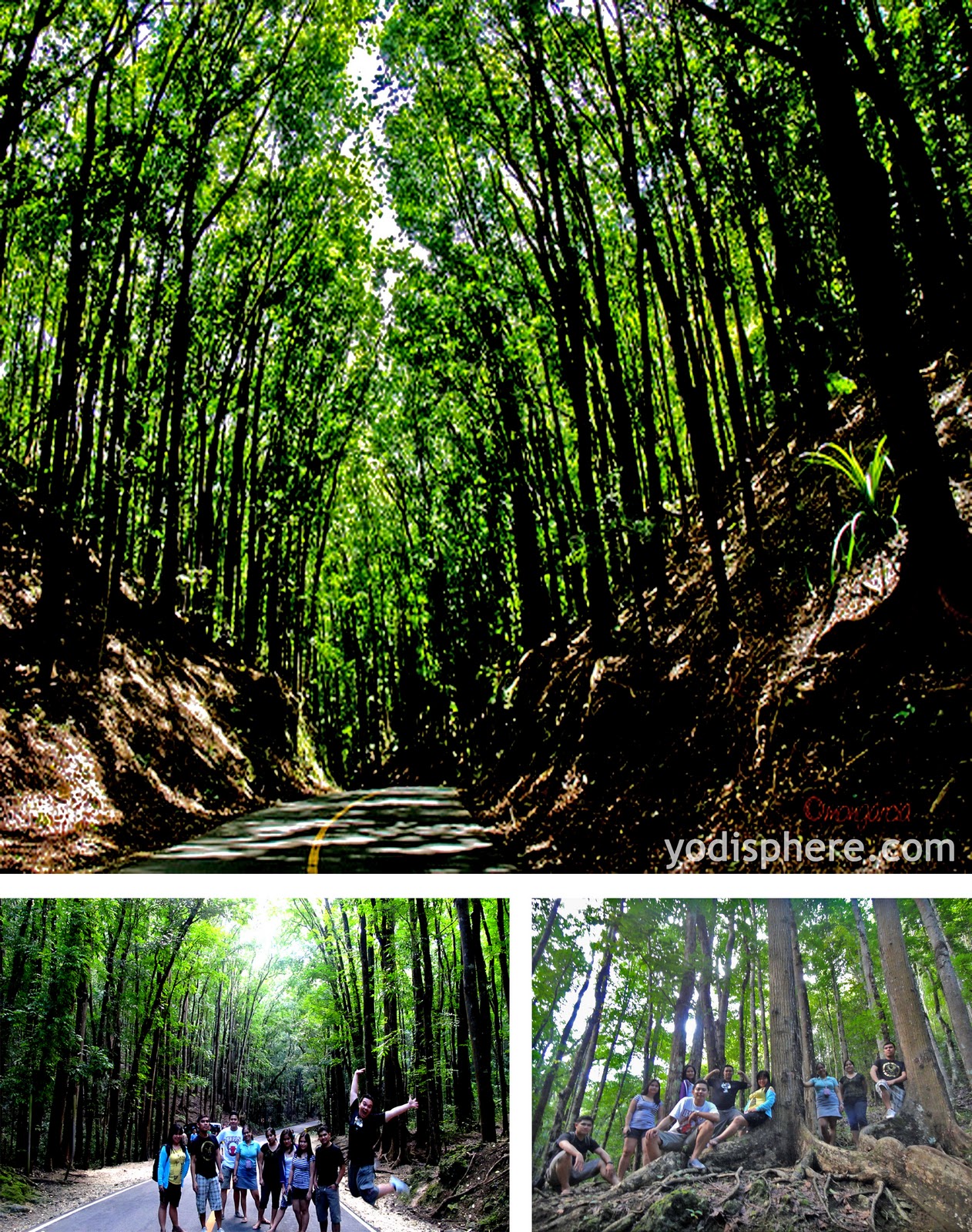
Even if it is still noontime, the area has this late-dawn effect due to the towering mahogany trees growing straight up, obscuring the sky by its branches and thick leaves. 

Our initial plan was to do a short horror-comedy video clip on this eerie forest. Myself, in a hood as the killer-with-a-knife chasing the girls. But our camera ran out of battery charge (damn!) and we don’t’ have enough time. Sayang masaya sana yun. What we did is just a few not-so-perfect jump shots.

Hanging-out at the Hanging Bridge 


This hanging bamboo bridge is located across the upper part of the Loboc River. This bridge hangs approximately 20 meters above the Loboc River and slightly sways back and forth as you walk across. Other than the two bridges, there’s nothing there except for a souvenir shop.

Anyway, you can a have a refreshing drink of fresh buko for only 20 pesos there. It’s a good quick stopover to have refreshing break on a long road trip.  

The bored Python, crazy Ostriches and other animals

We have some pictures of the python and the animals in cages but I think they are not worth sharing because I’m sure you’ve already seen one - plus what’s so exciting about animals in cages. I’d rather watch Animal Planet or National Geographic.

However, you can still include this in the tour if you’re a fan of viewing lazy python, snakes, ostriches, owls and other animals in cages.

What I suggest is the zip-line or the butterfly farm instead. Zip-line adventure is definitely more fun than looking at these bored animals. 

Ok that’s all for our minor bohol tour stopovers. I should have included Bohol Bee Farm, Hinagdanan Cave and Bayoyoy the Dwarfman but I think these parts deserve a separate post.

More of Bohol on my next posts!
 
_________

Wednesday, October 6, 2010

Bohol Tour » The Nostalgia and Elegance of Bohol’s Famous Old Churches

Aside from its amazing natural beauty, Bohol is also home to a numerous historical stone churches, ancient watchtowers and Spanish era convents with great frescoes. Bohol’s vibrant tourist industry brought us, together with other travelers, on quick walking trips to these sites, which is somehow, is their way of telling us some snippets of their old history. We visited four churches in Bohol – Baclayon, Dauis, Loboc and Panglao Church. The impression these churches gave me is that visiting these sites was done for bland relaxation, picture taking and art appreciation.

However, my experience of doing this Visita Iglesia, which was supposed to give me lectures of the old life, always gave me this nagging desire to search for origin, purity and silence, amidst the apparent aimlessness and whimsy of modernity. Yet, these thoughts had taken a rather peculiar turn; it seemed to me that these churches was still there, not because of hosts of other reasons, but largely to thank God for not destroying the world at the turn of the century. Yes I know, that is the profane attitude of the modern religious elite, which I am not.

Baclayon Church: The Church of Our Lady of the Immaculate Conception 

The sun was at its noon peak when we reached the Baclayon Church. The church’s open area on the left side, used as parking space for visitors was almost full- a blasphemous presence of modern things against the century old structure. I learned that Baclayon is one of the oldest churches in the Philippines - from the looks of it, I will not challenge that. The structure looks like the wall of Intramuros in Manila. Inside the church are colorful frescoes and some centuries-old relics and artifacts, which are all religious in nature.
According to Regalado Trota José, a well known art historian and author of the book "Visita Iglesia Bohol", some 200 native forced laborers constructed the church from coral stones, which they took from the sea, cut into square blocks, and piled on to each other. They used bamboo to move and lift the stones in position, and used the white of a million eggs and lime as to cement them together.

Our driver/tour guide told us that there is some mysterious phenomena happening here in the church. He showed us the supposed replica of the face of Saint Pio, the first stigmatized priest in the history of the Church, appearing in one of the pillars at the side of this centuries-old church. He said this is what continuously amazes the visitors here, so we immediately took our pictures with the supposed image as our backdrop. Well, for a non-devotee, this is nothing more than a natural anomaly.

We thought the church was closed, and we can only looked at it outside but there is an entrance via the sacristy. The church has strict policy on proper attire inside the church. According to the reminder posted on the entrance, “The sacredness on the Eucharistic celebration urges all participants to dress, manifest the importance of what they are doing.”

Don’t fret if you are on you usual tourist outfit. You can still enter the church because they will give you a large bandana to cover your voluptuous cleavage and legs – (so as not to distract the boys in their meditation.)

Church of Dauis: The Church of Our Lady of the Assumption
Located in the town of Dauis, three kilometers from Tagbilaran City, Dauis Church is truly one of Bohol's beautiful churches. Despite a semi-modern façade it has retained its Spanish architecture, with Romanesque and Byzantine influence. The interior has life-like murals painted on the ceiling. Beautiful frescoes painted in 1916 by a painter named Ray Francia decorate the entire ceiling of the church.


A local guide directed us to the enclosed well, called the Mama Mary's Well, at the foot of the main altar. She said the well is known for its healing power. According to the local history, this well originated from the Spanish era. Pirates often attacked Christian settlements and it was during one such attack that the people took refuge behind locked doors of the church. Besieged by the enemy for days, the people run out of food and water. The well miraculously sprang up and since then has become the source of drinking water for the populace nearby, especially during droughts. The water tastes truly fresh, despite the well’s closeness to the seashore.

Water from the well is available in bottles for free but you can give cash donation if you want. Your religious Mom or your Lola will love it as your take home gift (pasalubong). Just don’t forget to tell them that it is a special miraculous water. 

Loboc Church: The Church of San Pedro

We came across this church on our way to Loboc River for our Buffet Lunch Cruise. Actually the church is picturesquely located by the banks of the Loboc River. But due to our limited schedule, we haven’t had the time to explore the church and its adjacent museum.

According to the National Commission for Culture and the Arts (NCCA), Loboc  church was built in the 17th and 18th centuries by the Jesuits, with enlargements in the 18th and 19th centuries by the Augustinian Recollects, and painting added in the early 20th century. The 17th century Jesuit church was later converted into apart of the three-level convento while the present church dates from the 18th century, with 19th century additions such as the belltower, the porticoes, and the funeral chapel. The convento is the only one in the country with three levels.

San Agustin Church and the Panglao Watchtower

The church of St. Augustine is 18 kilometers from Tagbilaran City, lying on the southwestern side of Panglao Island. The massive stone church is nestled on a plain, its back to the seashore and its right side facing a big, wide plaza which is the venue of the town’s many religious and social activities. We didn’t have the chance to go inside the church because of an ongoing funeral service.
Instead, we just checked out the nearby Panglao Watch Tower, which is a 5-storey bell tower built of cut stone in 1851. Octagon in shape and covered by a pitched roof, it is said to be the tallest of its kind in the Philippines. Well I don’t know how many are there in the Philippiines – maybe two? Ha ha.

They said from this tower, you can see the islands of Siquijor, Cebu, and Negros, and, with clear weather, Mindanao and Camiguin. Also the tiny islands close to Panglao, such as Balicasag Island, can be seen from this tower. However, the tower is in ruin now and is in dire need of repair. Based on its current state, I guess they are just waiting for its total collapse, for them to consider repairs.

There are other elegant churches in Bohol but you need extra day to visit all of it. If you are planning to visit Bohol, include a quick stop on these sites aside from the Chocolate Hills – you won’t regret it. 

_________________

Monday, September 27, 2010

Bohol Tour » Blood Compact Site and Monument, A Bit of Philippine History on Our Leisure Trip

The lazy morning at Tagbilaran was over and we immediately go to our first stop, the Blood Compact site and monument, a particular site made in honor of a very important event in the Philippine history done between Miguel Lopez de Legazpi of Spain and Rajah Sikatuna of Bohol.

What to expect in the Blood Compact Site

There was nothing there except for some statues overlooking a wonderful view of the sea on the side of the highway. But like many landmarks and statues, there are bits of Philippine history there. I’m not a history buff but sometimes it is nice to know some facts about the places we’ve been – it makes the trip more meaningful.

The blood compact site is in front of a public school of Baranggay Bool in Tagbilaran City along the highway, where a montage of figures - a monument to the site where Datu Sikatuna, the native Chieftain inflicted a flesh wound on himself and let his blood flow into the same flesh wound on the arm of Miguel Lopez de Legazpi, who was representing the King of Spain.
Group camwhoring at the monument
All you can do there is have a quick picture taking – I mean quick - because there are other visitors lining up to take pictures. 
Can I have a drink too?
We are thinking of doing some crazy pictures with the statues but lots of other tourists are waiting their turn so we just took pictures of the nice overlooking view of the sea at the back of the blood compact site.

Vendors at the gate of the  Blood Compact Site
This is also the place where you can buy cheap keepsakes (tarsier keychains, wallets, pearls, etc.) and other anik-anik to bring home. Other locations offer same items but on a very high tourist price, so you better do your bargaining here.         

A nice touch of history on our leisure trip 


Here’s a bit of my research:

This historical event [blood compact], which happened on March 16, 1565, is considered as the first Treaty of Friendship between the two races. This blood compact, an ancient method of sealing brotherhood and friendship, was considered as the first international treaty concluded between a foreign leader and a Filipino chieftain in Philippine history.

In his report to Philip II, Legazpi described the ceremony of the blood compact in the following words:
"It is observed in the following manner: one from each party draws two or three drops of blood from his own arm or breast and mixes them in the same cup, with water or wine. Then the mixture must be divided equally between two cups, and neither person may depart until both cups are alike drained."
The Blood Compact (El Pacto de Sangre), famous painting by Juan Luna
In honor of this Blood Compact ceremony, the former President of the Philippines Elpidio Quirino established the Order of Sikatuna, a presidential decoration conferred upon politicians. Nowadays, the Order of Sikatuna is also a diplomatic merit conferred upon individuals who have rendered exceptional and meritorious services to the Republic of the Philippines. Boxing champ Manny Pacquiao was conferred this award last year. I suggest they develop this blood compact site and include a room where tourist can see Filipinos who are declared as Datu. 

Notes on the Raha Katuna discrepancy. After concluding a peace agreement with leaders of Samar and nearby islands, Legazpi proceeded to Bohol, an island near Cebu. There, he befriended the local chieftains – Katuna (Sikatuna, in Spanish Records) and Gala (Sigala in Spanish documents. The discrepancy lies in the fact that the Spanish chroniclers thought that the Filipino article “Si” was part of the names of these local chieftains.

The Sandugo Festival in honor of the Blood Compact

Re-enactment of the Blood Compact between Sikatuna and Legazpi
Sandugo Festival is Boholano’s very own festival which is a commemoration of this historical event that had transpired in Tagbilaran City, the very heart of Bohol. The festival showcase the re-enactment of the blood compact between Datu Sikatuna and the Spanish king conquistador Captain General Miguel de Legazpi. The festivity commences in the month of March each year. Boholanos that are overseas usually come home and gather together to take part in this event.

Wrong place for the Monument?
 

View at back of the monument
But wait, the actual site was recently challenged by the nearby fifth-class municipality of Loay, which has the kind of deep-water harbor that could accommodate Legaspi's fleet. Coastal Tagbilaran back then was supposedly little more than a mangrove swamp. After an investigation by a panel of experts convened by the National Historical Institute, Loay (on the shores of Hinawanan Bay, Barangay Villalimpia) was declared the official site of the Legazpi-Sikatuna "Sandugo".
Yodz Note

A quick stop to this monument serves as a quick refresher of my elementary history class. Some find it boring but it’s a nice touch on our Bohol tour.   

On my next blog post, I’ll feature the amazing old churches of Bohol that we visited.
Till then folks!

______________
References [Retrieved 27 September 2010] by yodz
» Bohol Blood Compact Site
» The Sandugo (Blood Compact) Wikipedia Article
» Zaide, Gregorio F. 1949. “The LEGAZPI-KATUNA Blood Compact – 1565”  Philippine Political and Cultural History Vol. 1
» Blood Compact Marker at the Blood Compact Shrine, Bool District, Tagbilaran City
» SANDUGO FESTIVAL – treaty of friendship as manifested in a blood compact
» Best of Cebu and Bohol – Interesting places to go in Bohol – Blood Compact Site PDP Digital Inc., 2002 Cebu City.
» Duka, Cecilo D. 2008. “Legazpi and Raha Katuna – Blood Compact” Struggle for Freedom, A textbook in Philippine History. Manila:Rex Bookstore Inc. 
» Arroyo confers Order of Sikatuna to boxing champ Pacquiao – Inquirer.net
» Severino, Howie “Much Ado About An Old Blood Compact”
» Loay vows grander celebration of Blood Compact’s 444th year – Bohol News Daily
[edit: links removed due to link farming Google policy]
________

Sunday, September 26, 2010

Lazy Morning at the City of Friendship » Tagbilaran City, Island Paradise Province of Bohol

Most people, if asked will not remember what they ate for breakfast. Maybe because it was unremarkable and routine - but I remembered this one, a simple carinderia breakfast by the Tagbilaran City Wharf.

We are on a tight budget so we always hunt the cheapest restaurant or carinderia. We asked our friendly driver to bring  us  to a place where we can have a cheap breakfast. There are fastfoods, but of course, we want something different. For backpackers like us, the hunt always adds excitement and fun to our travel experience and it always never fail us.


This is the first breakfast we had during our trip to the island paradise province of Bohol.
Chorizo, the Tagbilaran-style longganisa
We had pandesal, scrambled eggs, batchoy and cute little chorizos.

The picturesque Tagbilaran City Wharf
Group Emo at the Tagbilaran City Wharf
Before taking our breakfast, the picturesque city wharf caught our attention and decided doing some quick early morning camwhoring.
Awesome view of the City Wharf - yes this is still the Philippines
The wharf - a nice place to spend lazy mornings
The beautiful setting of the Tagbilaran City Wharf serves as the major insular port of entry in the Province of Bohol which mainly connects Bohol Island to Cebu City. Travelers from Cebu City can reach Tagbilaran City Wharf through fast crafts within an hour and a half only.

The backpackers, just landed
We arrived at the Tagbilaran Airport at around 7 a.m. and decided to take a peek at the city while waiting for our travel buddies on a separate 10:00 am flight.

Abby, Chuck and Anjho at the Souvenir Shop
Peanut Kisses, the most famous pasalubong from Bohol
The City is also famous for sweet Kalamay
Tarsier keychains, handicrafts and a lot more for pasalubong
Since we didn't have anything to do that early in the morning, we decided to take a quick morning city tour and do some pasalubong shopping, buy some stuff we need for the day and of course, city camwhoring after breakfast.

Quick Facts about Tagbilaran City, The City of Friendship

Welcome to the City of Friendship!
"Welcome to the City of Friendship," this is what will greet you on the welcome arc at the airport upon arrival. I only met a few people in Bohol, our driver cum tour guide, and a bunch of other tour guides and locals on our different destinations. I must say, yes,they are generally friendly. 

Tagbilaran is considered by the Institute for Solidarity in Asia as one of the eight (8) Philippine Dream Cities, along with Samal, San Fernando, La Union, Cebu City, Iloilo City, Marikina, Naga, Calbayog City and Surigao City. It was also recognized as one of the (20) "Most Competitive Cities in the Philippines" and "Pinoy Cities on the Rise" in 2005 and 2007, and First in the Quality of Life Category for the same 2 years, awarded by the Asian Institute of Management (AIM) Policy Center. 

With its strategic geographic location, Tagbilaran City is the gateway of the booming tourism industry of Bohol province.Tagbilaran City is one of the most promising tourist destinations in the Philippines and is a jump off point to our main destinations like Panglao Island, Chocolate Hills, and the Loboc River.

Awesome place to have a lazy breakfast and start our Bohol tour! 


Like this post on Facebook